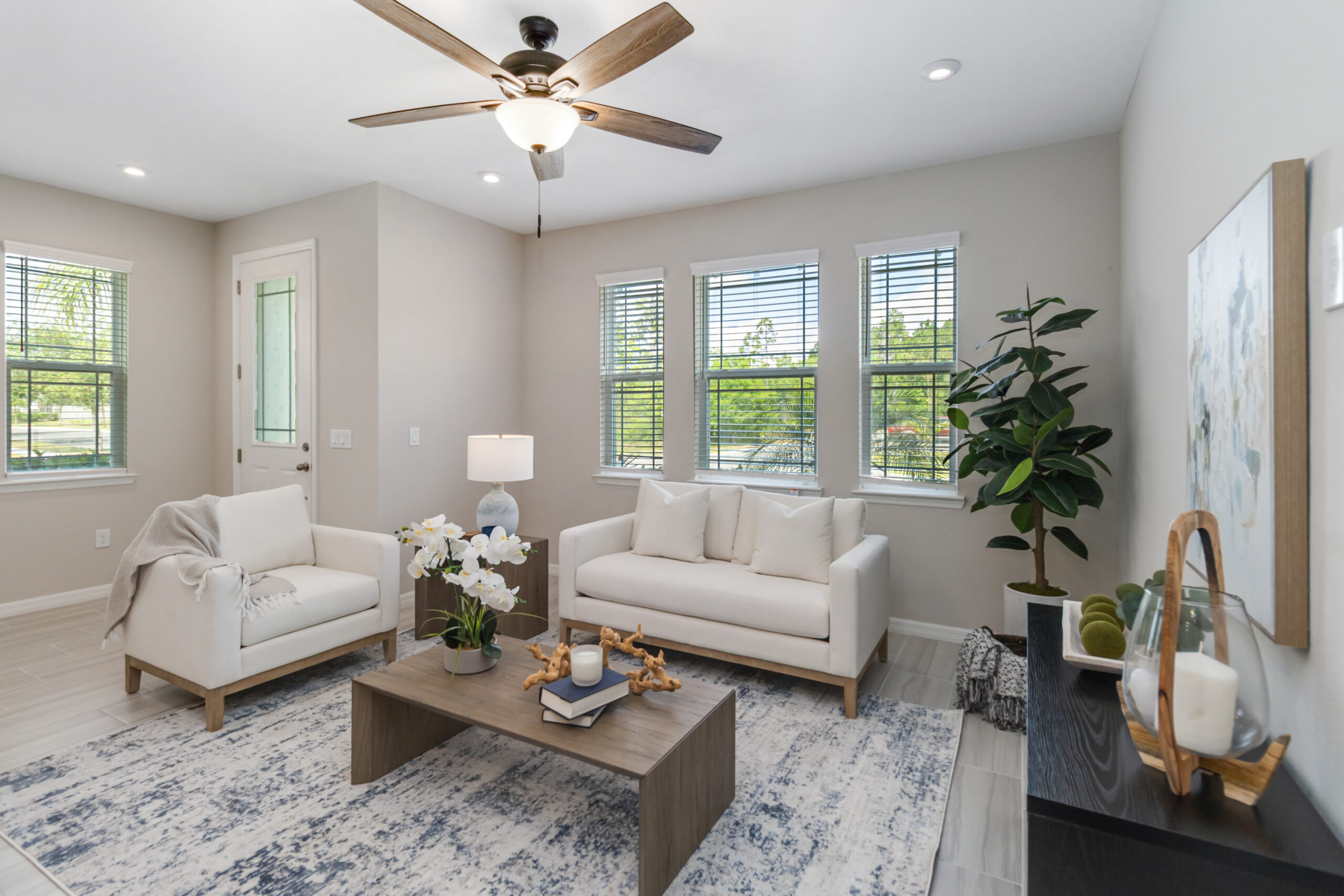
Key Takeaways: Living room staging ideas that make your space look bigger include removing excess furniture, creating clear walking paths, and maximizing natural light. Use light colors, appropriately sized rugs, mirrors, and simple decor to make the room feel open, bright, and inviting to buyers.
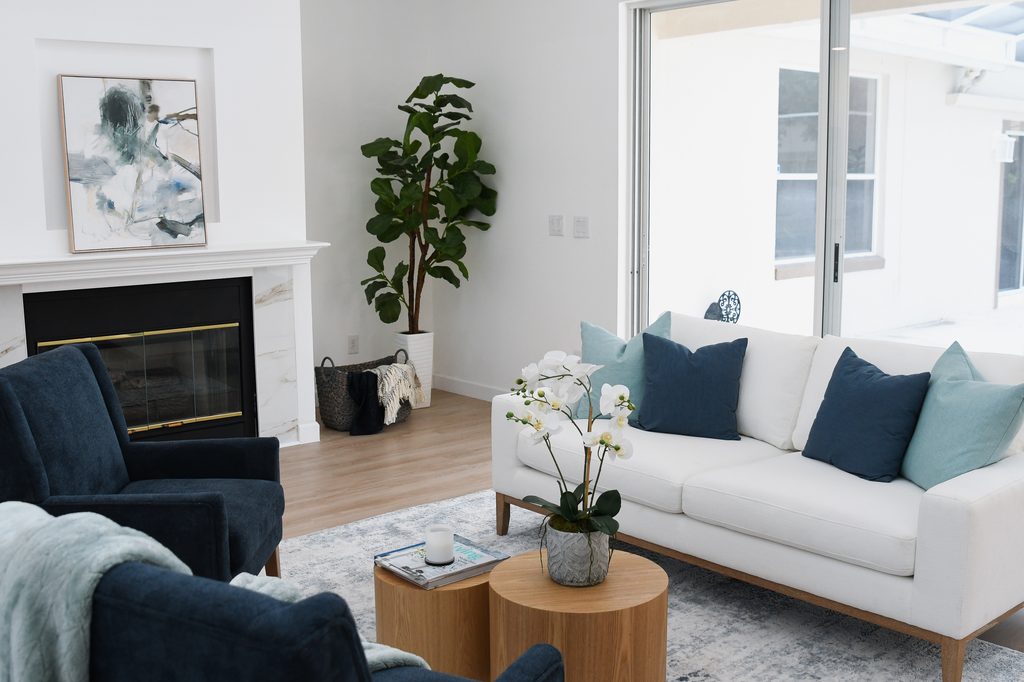
A living room doesn’t have to be large to make a great first impression. With the right furniture arrangement, lighting, and styling, even a small or awkwardly shaped space can feel open, comfortable, and inviting.
When you’re selling your home, living room staging helps potential buyers see more than the room’s current layout. It helps them imagine how they could use the space, where they would relax, and how their own furniture might fit. The goal isn’t to make the room look empty. It’s to make every square foot feel intentional.
The best part? You don’t need to renovate or purchase an entirely new living room set to make a difference. A few thoughtful changes can help your space feel brighter, larger, and more appealing to buyers.
Here are 13 living room staging ideas to help you make your space look bigger before listing your home.
These simple living room staging ideas can help highlight your home’s best features while making even a smaller space feel more spacious and buyer-friendly.
1. Start by Decluttering Your Living Room

Before rearranging furniture or shopping for new accessories, start with a thorough decluttering session.
Too much furniture and decor can make a living room feel smaller than it actually is. When every surface is covered and every corner is occupied, buyers have a harder time noticing the room’s size, layout, and best features.
Start by removing anything that doesn’t serve a purpose or contribute to the room’s overall appearance.
Focus on:
- Clearing coffee tables, end tables, and console tables.
- Removing unnecessary furniture and oversized accessories.
- Packing away family photos, personal collections, and sentimental items.
- Simplifying bookshelves and built-in cabinets.
- Removing excess throw pillows and blankets.
Professional home stagers often remove a significant amount of furniture from a space to improve its flow and visual appeal. You don’t necessarily need to remove half your furnishings, but you should be willing to edit what stays.
The goal is to give buyers room to move comfortably and see the living room’s full potential.
Staging tip: Don’t simply move clutter into closets or cabinets. Buyers may open storage spaces during a showing, so make sure those areas feel organized, too.
2. Choose Furniture That Fits the Room
One of the most common living room staging mistakes is using furniture that’s too large for the space.
An oversized sectional might be comfortable for your family, but if it takes up most of the room, it can make the space feel cramped. The same goes for bulky recliners, large coffee tables, and oversized entertainment centers.
When staging a living room, choose furniture that feels proportional to the room’s dimensions.
Consider:
- A sofa with a slimmer profile and visible legs.
- Smaller accent chairs instead of oversized recliners.
- Compact coffee tables or nesting tables.
- Narrow console tables instead of bulky storage pieces.
- A smaller sectional if it fits the layout comfortably.
Furniture with exposed legs can help create a sense of openness because more of the floor remains visible. Pieces with lighter visual profiles can also make a room feel less crowded.
You don’t have to eliminate seating entirely. Instead, focus on choosing the right pieces and leaving enough room between them.
One of the most practical living room staging ideas is to look at each furniture piece in relation to the room, rather than judging it on its own. A sofa that looks beautiful in a furniture showroom may overwhelm your living room at home.
3. Arrange Furniture to Create More Space
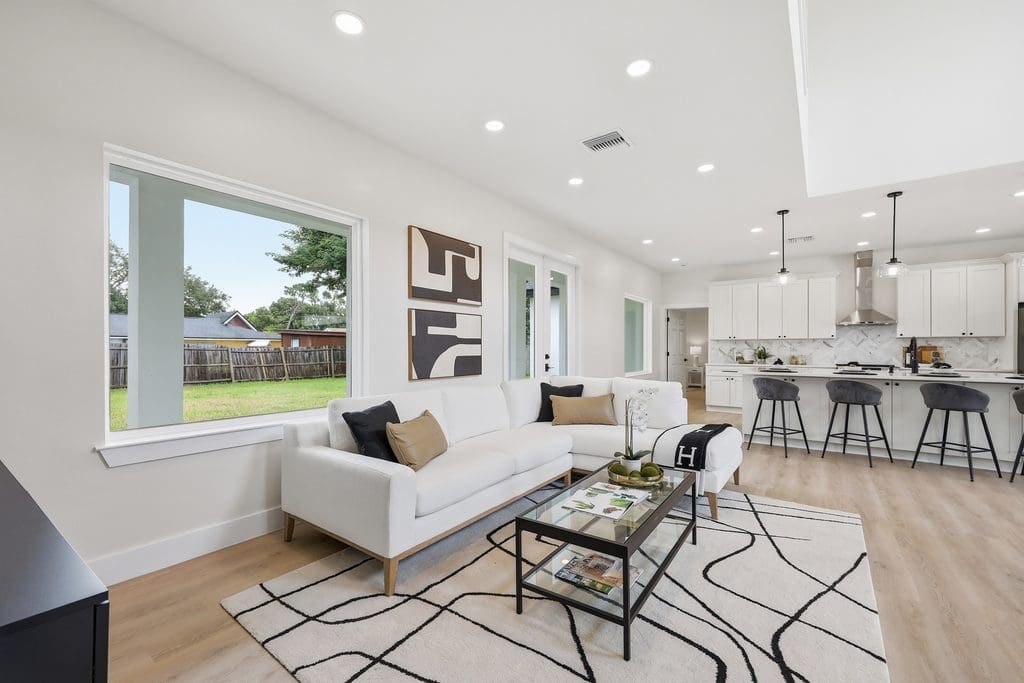
Furniture placement can make a significant difference in how large a living room feels.
Even a spacious room can feel cramped when furniture blocks walkways or interrupts the natural flow. On the other hand, a thoughtful layout can make a smaller living room feel more open and functional.
Start by identifying the room’s main purpose and focal point. This might be a fireplace, a large window, or a television.
Then arrange the furniture around that feature.
Create clear walking paths
Buyers should be able to move through the room without squeezing between furniture.
Avoid placing sofas directly in front of doorways or positioning chairs where they interrupt the natural path through the space. Keep frequently used walkways open and make sure buyers can easily access windows, built-ins, and other features.
Don’t automatically push everything against the walls
It might seem like pushing furniture against the walls will make a room feel bigger, but that isn’t always the case.
In some layouts, pulling furniture slightly away from the walls creates depth and makes the room feel more intentional. A floating sofa can help define a seating area without making the room feel like a hallway.
The key is to leave enough space for comfortable movement.
Create distinct zones in long living rooms
If your living room is long and narrow, trying to make the entire space function as one large seating area can feel awkward.
Instead, consider creating two smaller zones.
For example:
- A main seating area centered around the television or fireplace.
- A reading nook with an accent chair and side table.
- A small work area with a desk.
- A secondary conversation area near a window.
Use furniture and area rugs to define each zone while maintaining a consistent design style throughout the room.
This approach helps buyers see how they could use the entire space instead of viewing the room as one long, empty stretch.
4. Use Light and Neutral Colors to Open Up the Space
Color can influence how spacious a room feels.
Light, neutral colors tend to reflect more light and create a sense of visual continuity. Dark or highly contrasting colors can make a room feel more enclosed, particularly when they’re used across large surfaces.
For living room staging, consider a palette built around:
- Warm white
- Soft beige
- Light gray
- Cream
- Pale taupe
You don’t have to remove every bit of color from the room. In fact, a completely neutral space can feel flat if it lacks texture or visual interest.
Instead, use neutral colors for the larger elements, such as walls, sofas, and rugs. Then introduce accent colors through pillows, artwork, plants, and smaller accessories.
A simple approach is the 60-30-10 color rule:
- 60%: The dominant color, typically a light neutral.
- 30%: A secondary color that complements the main shade.
- 10%: An accent color that adds personality.
For example, a living room might use warm white walls, a beige sofa, and muted green pillows with a few natural wood accents.
The result is a cohesive space that feels bright without looking boring.
5. Maximize Natural Light
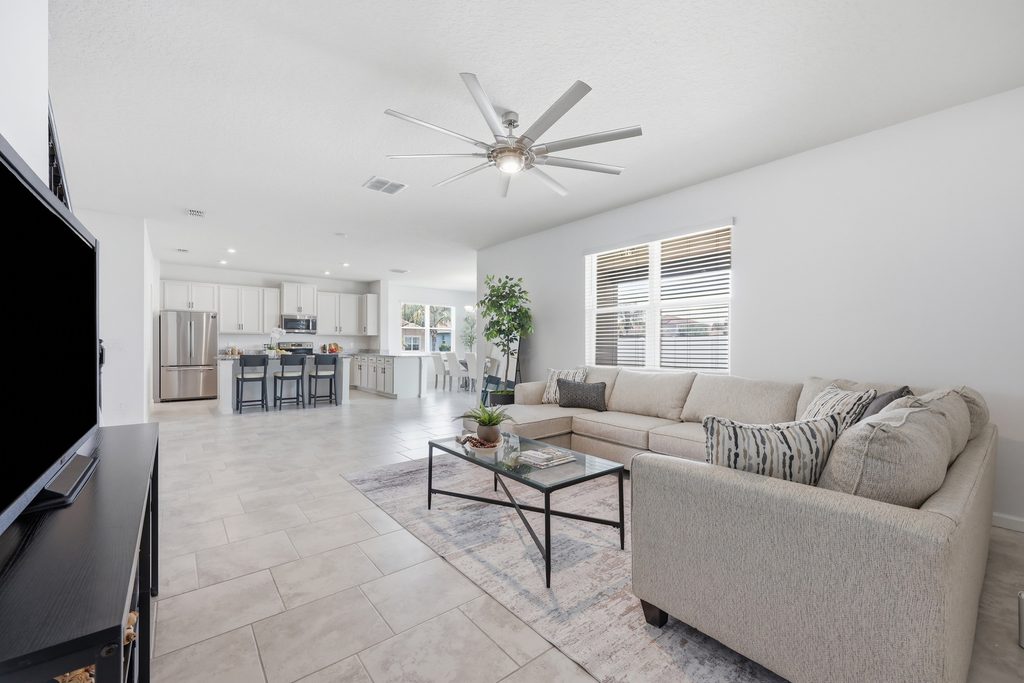
Of all the living room staging ideas you can try, maximizing natural light is one of the easiest ways to make a space feel larger without changing its layout.
Natural light can make a living room feel brighter, more open, and more connected to the outdoors.
Before showings, make sure your windows are doing as much work as possible.
Start by opening curtains and blinds completely. If your window treatments are heavy, dark, or overly decorative, consider removing them or replacing them with something lighter.
When choosing curtains, pay attention to where they’re installed.
Hanging curtains higher than the window frame, closer to the ceiling, can create the illusion of taller ceilings. Extending the curtain rod beyond the window’s sides can also make the window appear wider.
For the best effect:
- Choose light-colored curtains that complement the walls.
- Avoid heavy fabrics that block natural light.
- Pull curtains fully open during showings.
- Raise blinds and open shutters.
- Clean windows inside and out.
Don’t overlook the view, either. If your living room has a beautiful backyard, mature trees, or a scenic view, make sure window treatments aren’t hiding it.
Staging tip: Clean windows can make a noticeable difference. Even a well-staged living room can feel dull when natural light is blocked by dust or dirty glass.
6. Use Mirrors to Make the Room Feel Larger
Mirrors are a useful staging tool because they can reflect light and create the illusion of additional space.
When placed thoughtfully, a mirror can make a small living room feel brighter and more open.
Consider placing a mirror:
- Across from a window to reflect natural light.
- Above a console table to create a focal point.
- On a wall that feels visually empty.
- Near a darker corner to help brighten the space.
The size and placement of the mirror matter. A mirror that’s too small may not have much visual impact, while an oversized mirror can overwhelm a small room if it’s not positioned carefully.
Pay attention to what the mirror reflects, too. Ideally, it should reflect a window, an attractive architectural feature, or a thoughtfully styled area.
Avoid positioning mirrors where they reflect clutter, an awkward furniture arrangement, or something you would rather buyers not notice.
7. Choose the Right Area Rug
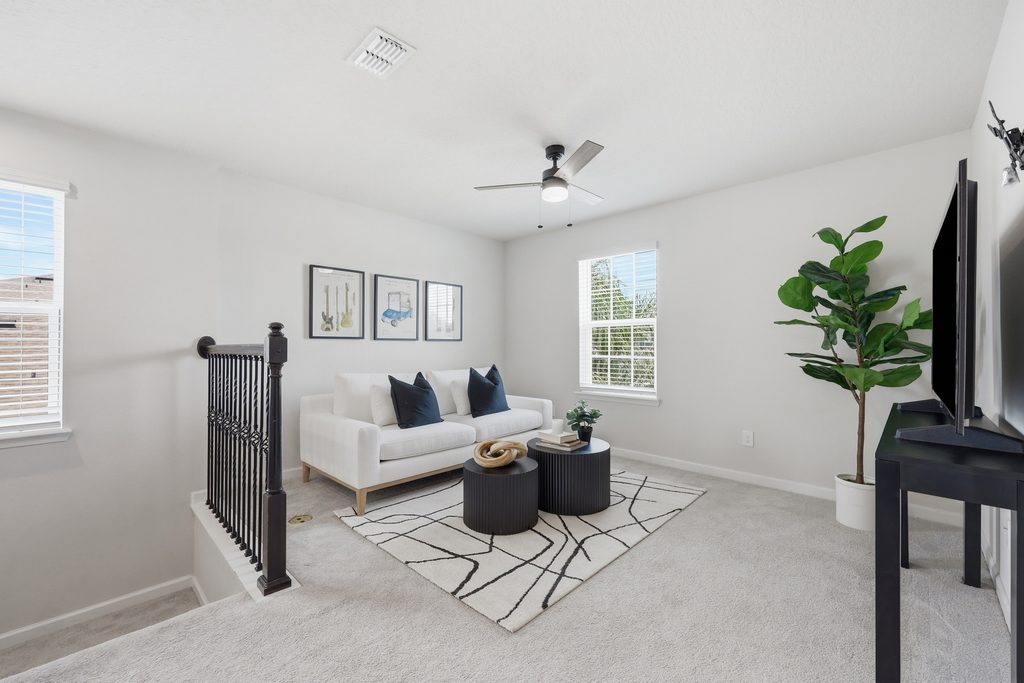
When comparing living room staging ideas, don’t underestimate the impact of choosing a rug that properly anchors the furniture and makes the seating area feel connected.
An area rug can help define a living room, create a sense of cohesion, and make the seating arrangement feel intentional.
However, choosing a rug that’s too small can have the opposite effect.
A small rug floating in the middle of a large seating arrangement can make the furniture feel disconnected and emphasize the room’s limited dimensions.
Instead, choose a rug that’s large enough to anchor the main seating area.
A common staging approach is to position the rug beneath the front legs of the sofa and accent chairs. This helps connect the furniture visually without requiring every piece to sit entirely on the rug.
When selecting a rug, consider:
- The size of the seating arrangement.
- The room’s overall color palette.
- The amount of visible flooring.
- The rug’s pattern and visual weight.
Light or neutral rugs can help a room feel airy, while subtle patterns and textures add interest without overwhelming the space.
If the room is long, an appropriately sized rug can also help define a seating zone and make the layout feel more balanced.
8. Keep Decor Simple but Inviting
A staged living room should feel welcoming, not empty.
The goal is to create a space where buyers can imagine relaxing, entertaining, or spending time with family. Thoughtful accessories can help communicate that feeling without making the room look cluttered.
Start with a few carefully selected pieces.
For example:
- A soft throw blanket draped over the sofa.
- Two or three coordinating pillows.
- A small plant on an end table.
- A simple vase of flowers.
- A few decorative objects on a coffee table.
When styling a coffee table, use a tray to group smaller items together. This creates a sense of organization and prevents the surface from looking cluttered.
You can also use the rule of three when arranging accessories. Grouping objects in odd numbers, particularly three, often creates a more balanced and visually interesting arrangement.
Vary the height, shape, and texture of the objects rather than lining them up in a row.
For bookshelves and built-ins, leave some open space between accessories. A few books, a plant, and a decorative object can be more effective than filling every shelf.
Add texture instead of too much color
Texture is a great way to make a neutral living room feel warm and inviting.
Consider mixing:
- Linen pillows.
- Soft knit throws.
- Natural wood.
- Woven baskets.
- Ceramic accessories.
These details create visual interest without introducing too many competing colors or patterns.
A few well-chosen accessories can help buyers connect emotionally with the space while keeping the room open and uncluttered.
9. Improve Lighting to Create a Spacious Feel
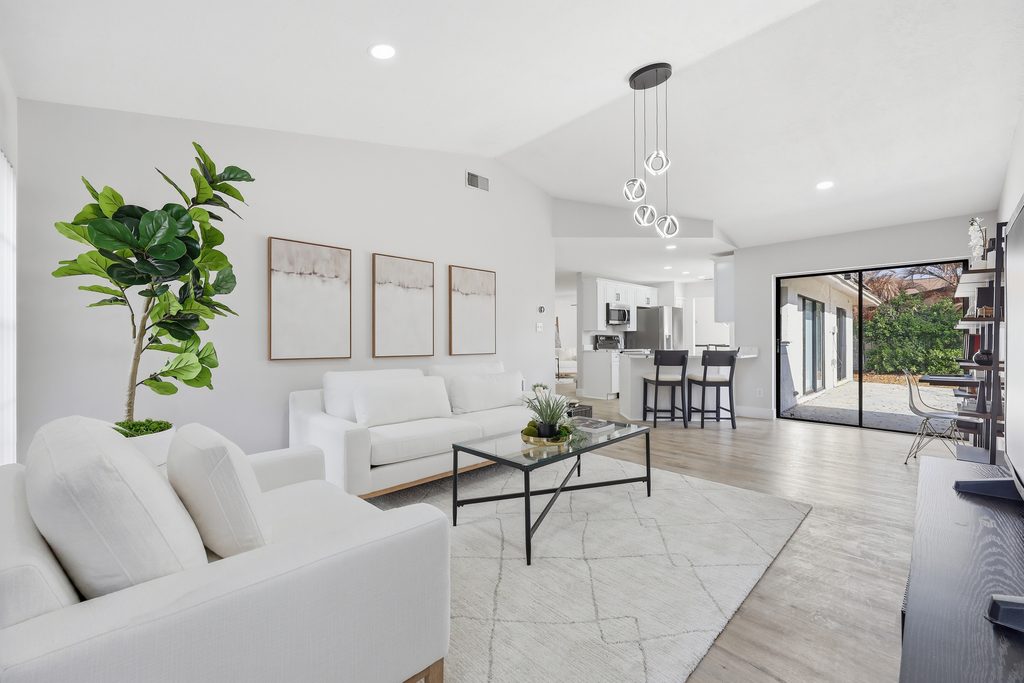
Natural light is important, but artificial lighting plays a major role in how a living room looks and feels, too.
A room that relies on a single overhead fixture may have dark corners or uneven lighting. Those shadows can make the space feel smaller than it is.
Instead, layer different types of lighting.
Ambient lighting
Ambient lighting provides general illumination throughout the room. This typically comes from overhead fixtures, recessed lighting, or ceiling lights.
Task lighting
Task lighting helps illuminate specific areas. Table lamps and floor lamps can brighten reading corners or seating areas.
Accent lighting
Accent lighting draws attention to particular features, such as artwork, built-in shelves, or architectural details.
Combining these light sources creates a more balanced and welcoming atmosphere.
Before a showing, turn on the lights throughout the living room and make sure any burned-out bulbs have been replaced.
Use bulbs with a consistent color temperature so the lighting feels cohesive rather than overly yellow in one area and stark white in another.
Don’t forget darker corners. A well-placed floor lamp can make an underused area feel more inviting and help the room appear more evenly lit.
10. Highlight the Living Room’s Best Features
Every living room has something worth highlighting.
It might be a fireplace, built-in shelving, large windows, high ceilings, or an interesting architectural detail.
When staging, arrange the furniture and accessories to draw attention to these features instead of competing with them.
Make the fireplace a focal point
If your living room has a fireplace, use it as an anchor for the furniture arrangement.
Keep the mantel simple. A piece of artwork, a small plant, or a few balanced accessories can help highlight the fireplace without overwhelming it.
Make sure the fireplace and surrounding area are clean. If it’s a working fireplace, consider staging it with a few simple accessories that communicate warmth and comfort.
Keep built-ins organized
Built-in cabinets and recessed shelves can be attractive selling features.
Remove unnecessary items and style the shelves with a few books, decorative objects, and plants. Avoid filling every shelf or using the space to store miscellaneous belongings.
The goal is to showcase the built-ins themselves.
Let architectural details stand out
If your living room has high ceilings, large windows, or beautiful trim, avoid placing bulky furniture or excessive decor in front of those features.
A clean, thoughtful layout helps buyers notice what makes the room special.
11. Make a Small Living Room Feel Bigger: Before and After Staging Tips
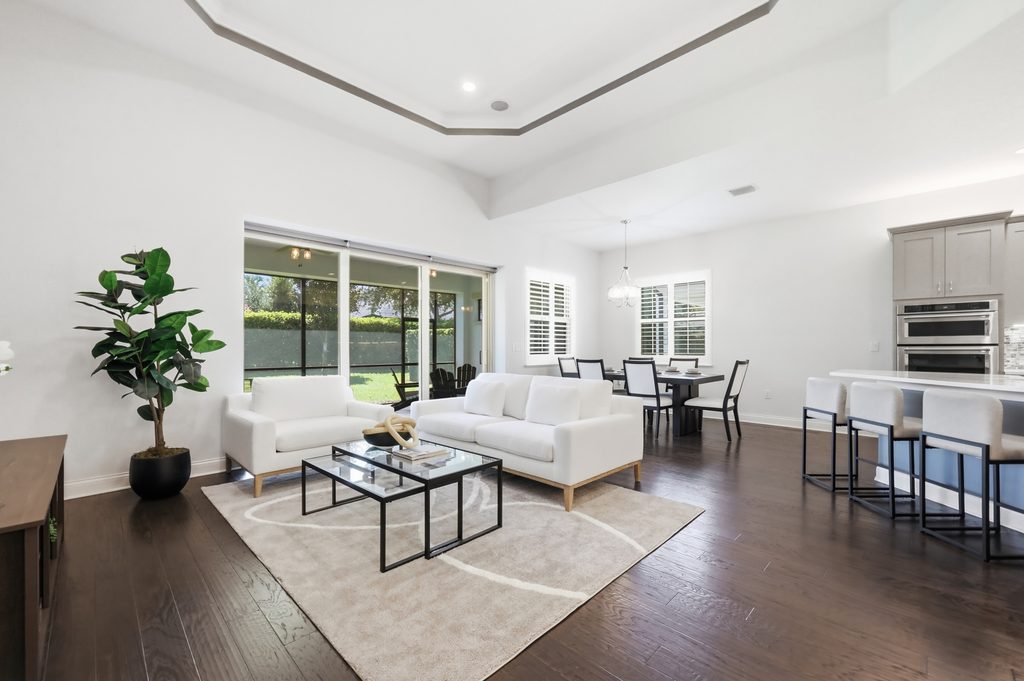
You don’t always need to purchase new furniture or completely redesign a living room to make it feel larger.
Sometimes, a few targeted changes can have the biggest impact.
Here’s an example of how you might approach a small living room before listing your home.
| Before staging | After staging |
| Oversized sectional dominates the room | Smaller sofa creates more visible floor space |
| Coffee table is covered in decor | A simple tray and a few accessories create a clean surface |
| Furniture blocks the natural walkway | Seating is rearranged to create a clear path |
| Heavy curtains cover the windows | Light curtains are hung higher and opened fully |
| Dark corners make the room feel enclosed | Floor and table lamps create balanced lighting |
| Small rug separates the furniture visually | Larger rug anchors the seating arrangement |
| Family photos and personal collections fill the room | Neutral artwork and simple accessories create a welcoming atmosphere |
The difference isn’t necessarily the amount of furniture in the room. It’s how the furniture is used.
When the layout feels intentional, the room has clear pathways, and the best features are easy to see, buyers can better understand the space’s potential.
12. Living Room Staging Mistakes That Make a Space Look Smaller
Even well-decorated living rooms can feel cramped when a few common staging mistakes are present.
Before listing your home, look for these issues.
Using oversized furniture
Large sofas, bulky recliners, and oversized coffee tables can overwhelm a small room.
Choose furniture that’s proportional to the space and leaves enough room to move comfortably.
Pushing every piece against the wall
This can make the room feel like a hallway rather than a comfortable living space.
Consider floating furniture or creating a defined seating arrangement when the layout allows.
Choosing a rug that’s too small
A rug that doesn’t connect the seating pieces can make the room feel visually fragmented.
Choose a rug that anchors the furniture and helps define the space.
Blocking natural light
Heavy curtains, closed blinds, and furniture positioned in front of windows can make a room feel darker and smaller.
Keep windows accessible and let in as much natural light as possible.
Leaving too much decor on surfaces
Cluttered coffee tables, crowded shelves, and excessive accessories can distract buyers from the room’s features.
Edit the decor and leave some open space.
Using too many contrasting colors and patterns
Too many competing colors can make a room feel visually busy.
Use a cohesive palette and introduce contrast through a few carefully selected accents.
Creating narrow or awkward walkways
Furniture should never make buyers feel like they have to navigate an obstacle course.
Make sure the room’s layout supports comfortable movement from one area to another.
Avoiding these common mistakes is just as important as following the best living room staging ideas, especially when preparing a smaller home for sale.
13. Living Room Staging Checklist for Sellers
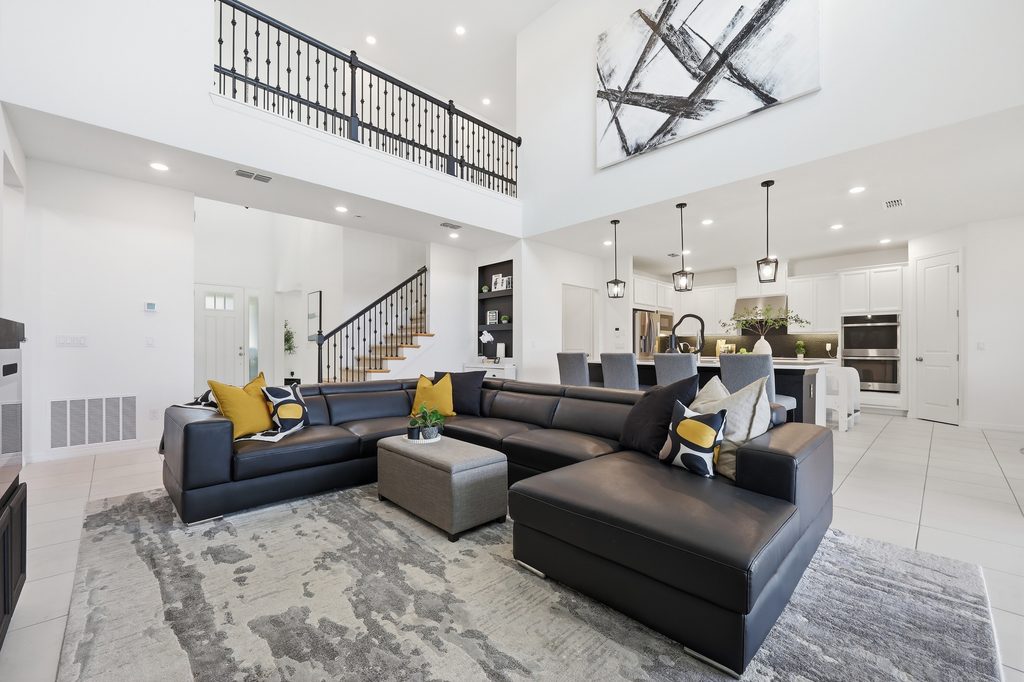
Getting ready for listing photos, showings, or an open house? Use this checklist to make sure your living room is ready to make a great first impression.
- Remove unnecessary furniture and decor.
- Pack away family photos and personal collections.
- Clear coffee tables, end tables, and shelves.
- Choose furniture that’s proportional to the room.
- Arrange seating to create clear walking paths.
- Open curtains and blinds to maximize natural light.
- Clean windows and mirrors.
- Use a coordinating area rug to anchor the seating area.
- Add a few neutral pillows and a simple throw.
- Style coffee tables and shelves with minimal accessories.
- Add a few plants or fresh flowers.
- Turn on overhead lights, table lamps, and floor lamps.
- Highlight fireplaces, built-ins, and architectural features.
- Make sure the room smells fresh and clean.
- Check that the space feels open, comfortable, and inviting.
A final walkthrough can help you spot anything that feels out of place. Try looking at the room from the entryway, since that’s often where buyers will get their first impression.
These living room staging ideas are especially useful when you’re working with an awkward layout or limited square footage and need to make the most of what you already have.
Frequently Asked Questions
How do you stage a living room to make it look bigger?
Start by removing unnecessary furniture and clutter. Choose appropriately scaled furnishings, create clear walking paths, and maximize natural light. Light colors, strategically placed mirrors, and a properly sized area rug can also help a living room feel more spacious.
What furniture should you remove when staging a living room?
Remove oversized sofas, bulky recliners, unnecessary accent chairs, large coffee tables, and any furniture that blocks walkways or windows. Keep the essential pieces that help buyers understand how the room can be used.
What colors make a living room look bigger?
Light, neutral colors such as warm white, beige, cream, and soft gray can help a living room feel brighter and more open. A cohesive color palette also creates visual continuity. Add small accents of color through pillows, artwork, and accessories.
Does furniture look better against the wall or away from it?
It depends on the room’s layout. Pulling furniture slightly away from the walls can create depth and make a seating area feel more intentional. However, in very narrow rooms, placing furniture along one wall may be necessary to preserve a comfortable walkway. The most important consideration is clear traffic flow.
How do you stage a small living room for sale?
Declutter the space, choose furniture that fits the room, and arrange seating to create clear pathways. Maximize natural light, use a cohesive color palette, and keep accessories minimal. The goal is to help buyers see the room’s functionality and potential.
What are the biggest living room staging mistakes?
Common mistakes include using oversized furniture, blocking windows, choosing rugs that are too small, overcrowding surfaces with decor, and creating awkward walkways. Too many competing colors or patterns can also make a room feel visually busy.
Conclusion
Making a living room look bigger doesn’t require a major renovation or an entirely new furniture set. The most effective living room staging ideas focus on creating space, maximizing light, and helping buyers understand how the room can function.
Start by decluttering, choosing appropriately scaled furniture, and improving the layout. Then use neutral colors, thoughtful accessories, and layered lighting to create a welcoming atmosphere.
When a living room feels open, comfortable, and intentional, buyers can focus on what matters most: imagining themselves at home.
Atipical Design Co helps homeowners and real estate agents prepare properties for the market with thoughtful staging tailored to each home’s layout, style, and selling goals. Whether your living room needs a few finishing touches or a more complete staging plan, the right design choices can help your home make a stronger first impression.
📲 Call or text 407-279-0448
📧 Email info@atipicaldesignco.com
🌐 Visit www.atipicaldesignco.com to start your Orlando home-staging journey.
- Fall Room Ideas: 15 Easy Ways to Make Your Home Feel Cozy for Autumn
 Key Takeaways: Fall room ideas don’t have to mean covering your home in pumpkins and orange. Start with warm colors, cozy textures, soft lighting, natural elements, and a few seasonal swaps to make every room feel inviting for autumn. There’s something about fall that makes you want your home to feel a little softer, warmer,… Read more: Fall Room Ideas: 15 Easy Ways to Make Your Home Feel Cozy for Autumn
- Why Do Interior Designers Cost So Much? The True Value of Interior Design
 It’s one of the most common questions homeowners and business owners ask when beginning a design project: Why do interior designers cost so much? At first glance, interior design can seem expensive. When people think about hiring an interior designer, they often picture selecting paint colors, choosing furniture, and styling accessories. But professional interior design… Read more: Why Do Interior Designers Cost So Much? The True Value of Interior Design
- 5 Trendy Ways to Use Texture in 2026 Interior Design
 If a space feels flat, it’s usually not the furniture. It’s the lack of texture. In 2026 interior design, texture is doing most of the work. It’s what makes a room feel layered, finished, and easy to connect with Here are 5 trendy ways to use texture in 2026 that actually make a difference 1.… Read more: 5 Trendy Ways to Use Texture in 2026 Interior Design
- How to Find Your Interior Design Style (Step-by-Step Guide)
 If you’ve ever saved a dozen different home photos and thought, “Why do I like all of these?”—you’re not alone. Learning how to find your interior design style isn’t about fitting into one category. It’s about creating a home that feels like you. At Atipical Design Co., we help clients turn scattered inspiration into a… Read more: How to Find Your Interior Design Style (Step-by-Step Guide)
Leave your thoughts: